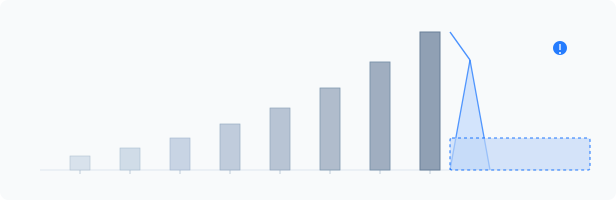
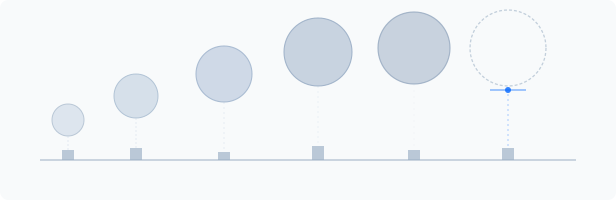
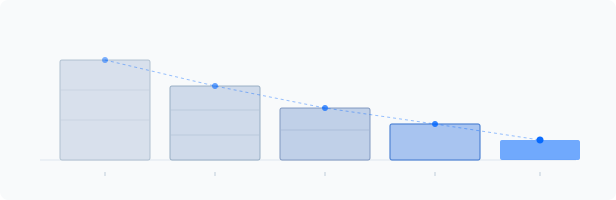
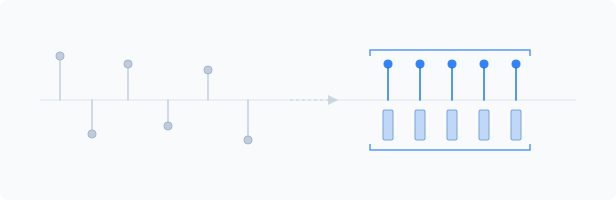
In a remote team, silence is always a signal. The question is what kind. At OmniStreak, silence shows up in three forms - and each means something different.
Silence type 1: Missing standup response
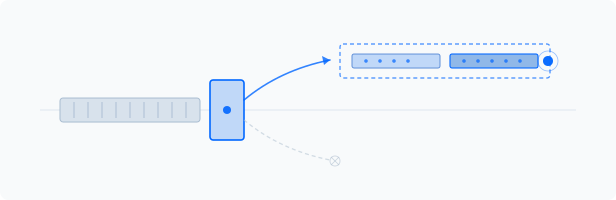
A developer who has been writing consistent standups for weeks and then goes quiet has flagged something - a blocker, a personal situation, disengagement, or something in between. This gets addressed the same day. The operations manager sends a private message that day - not at the next standup, not at the end of the week.
Silence type 2: A ticket that stops moving
A task in "In Progress" for three days with no status update and no question in the question window means the developer is either stuck and not saying so, or the task has been deprioritized for a reason nobody knows about. Both need to surface before the sprint ends.
Silence type 3: Minimal participation
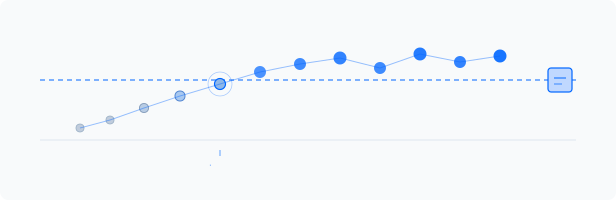
A developer who participates but only minimally - one-word standup answers, tickets updated only when prompted, no questions in the question window - is harder to detect than outright silence but equally telling. It often precedes either a request to leave or a drop in quality.
How to respond to silence
The response is not confrontation and it is not surveillance. It is a private, direct conversation: something seems different lately, is everything okay, is there anything blocking your work?
Most of the time, the answer is either a practical problem that can be solved - unclear requirements, a dependency they were waiting on - or a personal situation where acknowledging it and adjusting temporarily is the right call.
The goal is not to catch people doing something wrong. It is to catch problems early enough that they are still solvable.